Pool Deck Cleaning in Jacksonville, FL
We clean pool decks, paver patios, and paver driveways throughout Jacksonville — removing algae, mold, and staining while using the lower pressure and technique pavers specifically need to avoid disturbing the joint sand between them. Beyond appearance, algae buildup on a pool deck is a genuine slip hazard, especially around wet edges and steps — this is one of the more safety-relevant cleaning jobs we do, not just a cosmetic one. Sealing is available as an add-on to protect pavers from future staining and joint-sand loss.
Our pool deck cleaning service in Jacksonville removes the slippery algae, mildew and stains that build up around pools and patios. Concrete, pavers and coated decks each get the right pressure, so the surface comes out clean, safer and undamaged.
Why Pool Decks Need Different Care Than a Driveway
A pool deck isn’t just another slab of concrete or set of pavers — a few things make it a distinct job:
- Constant moisture exposure. Splash-out, humidity, and shade from surrounding landscaping or pool cages keep pool decks damp far more often than a driveway, which is exactly the condition algae needs to establish and spread quickly.
- Chlorine and pool chemical exposure. Residue from pool water can interact with cleaning solutions differently than a standard driveway, which affects what treatment approach makes sense.
- Barefoot traffic. Unlike a driveway, people are walking on a pool deck barefoot and wet — which means slip hazard from algae buildup is a real, practical safety concern, not just an aesthetic one.
- Paver-specific technique, if applicable. Many Jacksonville pool decks use pavers rather than poured concrete, and pavers require a different pressure and approach than solid concrete to avoid washing out the sand between joints.
Pavers vs. Poured Concrete: Why the Method Changes
Poured concrete pool decks can generally handle the same surface-cleaning approach used on driveways — moderate-to-higher pressure through a surface cleaner attachment for even results.
Paver pool decks and patios need a different, more careful approach:
- Pressure has to be kept lower to avoid blasting out the sand that holds pavers in place and keeps them from shifting
- After cleaning, joint sand often needs to be replenished (re-sanded) since some loss during cleaning is normal even with proper technique
- Sealing after cleaning is worth considering for pavers specifically — it helps lock in joint sand, resists future staining, and can reduce how quickly algae re-establishes in the shaded, damp conditions common around a pool
If you’re not sure whether your pool deck is poured concrete or pavers, we can confirm this during our assessment — it directly affects both technique and price.
What We Clean
- Pool decks — concrete or paver, including the deck surface itself and surrounding coping.
- Paver patios — whether or not they’re near a pool, using the same joint-sand-conscious approach.
- Paver driveways — an increasingly common feature in newer Jacksonville-area developments, cleaned with the same care as paver patios.
- Retaining walls and paver borders — often cleaned alongside a patio or driveway job, and one of the more common places we see efflorescence develop given how often these areas hold moisture behind them. → Full efflorescence removal details
Our Process
- Identify the surface type. Poured concrete vs. pavers determines pressure level and technique from the start.
- Pre-treat algae and organic staining. Especially important in shaded pool areas, where buildup tends to be heavier than on an open driveway.
- Clean at the appropriate pressure. Lower pressure and more careful technique for pavers; standard surface cleaning for poured concrete.
- Re-sand paver joints if needed. We’ll flag this during the job if cleaning has visibly displaced joint sand.
- Offer sealing as a follow-up option. Not required, but worth discussing for pavers specifically given how much it can extend the time between future cleanings.
What It Costs
Pool deck and paver cleaning is priced by square footage, with pavers typically running slightly higher than poured concrete due to the more careful technique required:
- Poured concrete pool deck: Priced similarly to driveway cleaning, by square footage
- Paver pool deck or patio: Slightly higher per-square-foot rate to account for joint-sand-conscious technique
- Re-sanding: Quoted separately if significant joint sand loss is visible after cleaning
- Sealing: Available as an add-on, quoted by square footage
Pool Deck Cleaning: Safety and Appearance
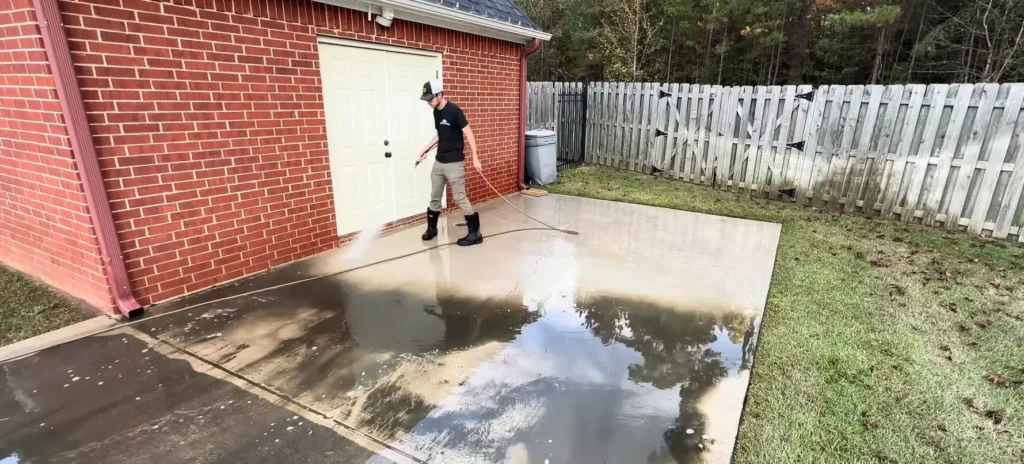
Green or black growth around a pool is more than a cosmetic problem. Wet algae makes concrete and pavers slick, and OSHA highlights slippery walking surfaces as a common cause of falls. Regular cleaning keeps the area safer for family and guests.
Concrete, Pavers and Coated Decks
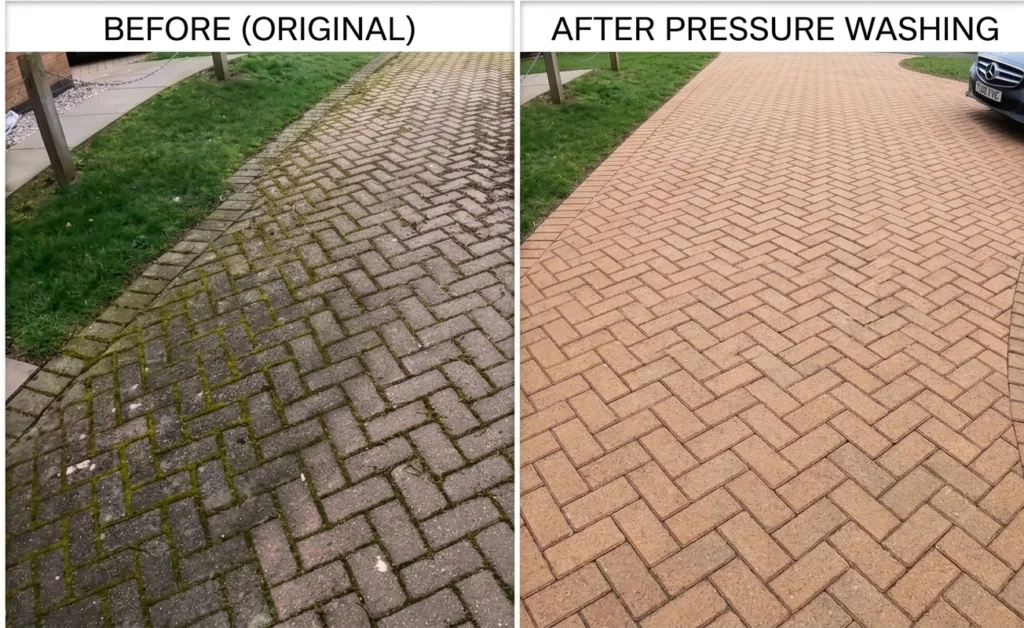
Poured concrete can handle a surface cleaner, while pavers need lower pressure to protect joint sand, and painted or coated decks need soft washing. If your deck is made of pavers, consider following up with paver cleaning and sealing to lock in the results.
When to Book Pool Deck Cleaning
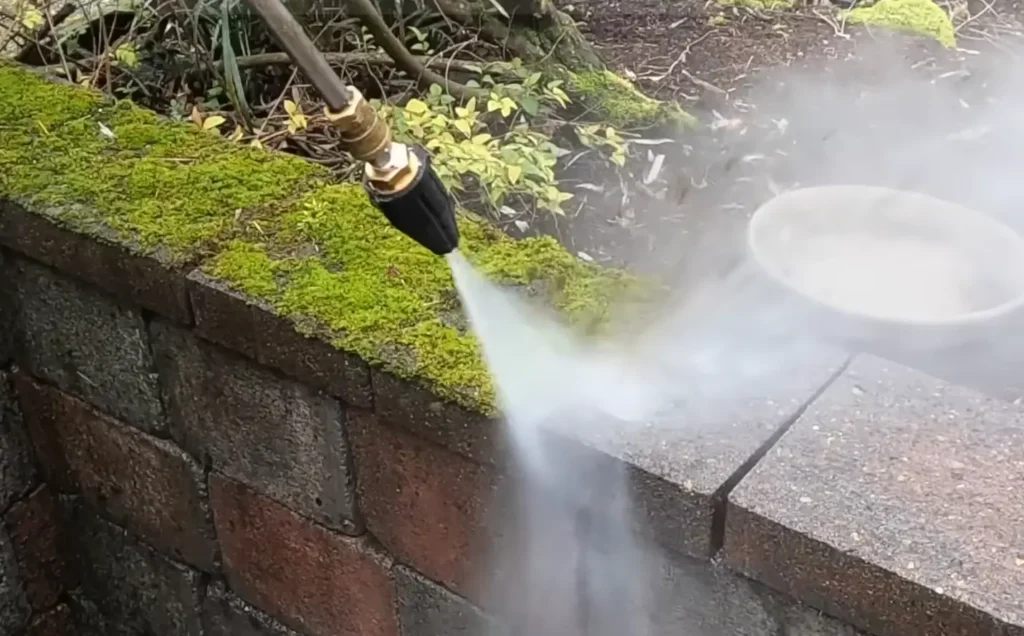
Spring, before pool season, is the most popular time for this service, but shaded decks may need service twice a year. Add house washing or fence cleaning to refresh the whole backyard in one visit. Call (904) 617-4480 for a free estimate.
Keeping Your Pool Area Clean Between Visits
Rinse leaves and debris off the deck regularly, keep sprinklers from spraying the same area every day and trim plants that block sunlight. These small steps slow algae growth so the surface stays brighter and less slippery between professional cleanings.
Frequently Asked Questions
Pool decks pick up pollen fast in early spring, which can accelerate algae growth once summer humidity hits. See our full pollen season guide for what to watch for.
A Pool Deck That’s as Safe as It Looks
Algae-free, slip-hazard-reduced, and cleaned with the technique your specific surface actually needs.