Roof Cleaning in Jacksonville, FL
Our roof cleaning service in Jacksonville removes black streaks, moss and lichen with a low-pressure soft wash, never high-pressure blasting. Soft washing kills the algae at the root and protects shingle granules, so your roof looks clean and lasts longer.
We soft wash roofs throughout Jacksonville to remove the black algae streaking common on Florida shingles — using low-pressure application instead of high-pressure roof cleaning, which can strip granules and void your shingle manufacturer’s warranty. Roof cleaning is quoted per property based on square footage and roof pitch rather than a flat rate. If what you’re seeing is black streaking rather than green moss or heavy debris, soft washing is almost always the correct approach — and it’s usually far less expensive than premature roof replacement caused by algae damage left untreated.
Roof soft washing — hero image placeholder
What’s Actually Causing Those Black Streaks
If your roof has dark streaking — usually running down from the ridge or concentrated on the north-facing slope — that’s not soot, dirt, or mold in the way most people assume. It’s most commonly caused by Gloeocapsa magma, an algae species that spreads by airborne spores and feeds specifically on the limestone filler used in most asphalt shingles. It thrives in humid climates with regular moisture, which describes Jacksonville’s weather almost year-round.
This matters for two reasons:
- It’s not just cosmetic. Left untreated, this algae can degrade shingle granules over time, which shortens your roof’s effective lifespan and can affect its ability to reflect heat efficiently — a real cost consideration in Florida’s climate.
- It explains why pressure washing your roof is a bad idea. Since the organism is feeding on the shingle material itself, blasting it with high pressure doesn’t address the underlying growth — it just knocks granules loose along with it, which is the opposite of what you want.
Why We Never Pressure Wash a Roof
This is worth being direct about, because it’s a genuine point of difference in how roofs should be cleaned versus how some companies actually clean them:
- High pressure strips protective granules off asphalt shingles, which accelerates wear and can shorten the life of your roof.
- Most shingle manufacturers explicitly warn against high-pressure cleaning in their warranty documentation, and improper cleaning can be used to deny warranty claims later.
- High pressure can force water under shingles and flashing, creating leak risk that wasn’t there before the cleaning even started.
- Soft washing addresses the actual cause — algae — using a low-pressure application of an appropriate cleaning solution that kills the organism at the surface and allows normal rainfall to rinse away the residue over the following days, rather than mechanically blasting the roof.
If a company is offering to “pressure wash” your roof at high PSI, that’s worth a second look before you agree to it.
How Roof Soft Washing Works
- Assessment from the ground and, when needed, the roof itself. We check the type and extent of staining, roof material, pitch, and overall condition before quoting.
- Protect landscaping and gutters. Plants near the drip line are pre-rinsed and protected, since roof cleaning solution runs off the edge of the roof during application.
- Apply a low-pressure cleaning solution. Rather than scrubbing or blasting, the solution is applied at low pressure and allowed to work on the algae directly.
- Light rinse where appropriate. Some jobs need a gentle low-pressure rinse; many are left to rinse naturally with the next rainfall, which is part of how soft washing is designed to work — it doesn’t require aggressively rinsing every trace of solution off immediately.
- Results appear over the following days, not necessarily immediately. This is normal for soft washing and is a deliberate part of how the treatment works, not a sign it didn’t take effect.
What It Costs
Roof cleaning pricing depends on:
- Roof square footage — larger roofs cost more, straightforwardly
- Roof pitch — steeper roofs take more time and sometimes additional safety equipment
- Severity of staining — heavier, longer-standing algae growth may need a stronger treatment or, occasionally, a second application
- Roof material — asphalt shingle, tile, and metal roofs are all cleaned differently and priced accordingly
We quote roof cleaning per property after a look at your specific roof — reach out with your address and roof type for an accurate range.
Why Soft Washing Is the Right Roof Cleaning Method
Those dark streaks on so many local roofs are usually a type of algae that feeds on the limestone filler in asphalt shingles. The Asphalt Roofing Manufacturers Association provides guidance on caring for asphalt roofs, and high pressure is not part of it. That is why every roof cleaning homeowners book with us uses soft washing.
What to Expect on Cleaning Day
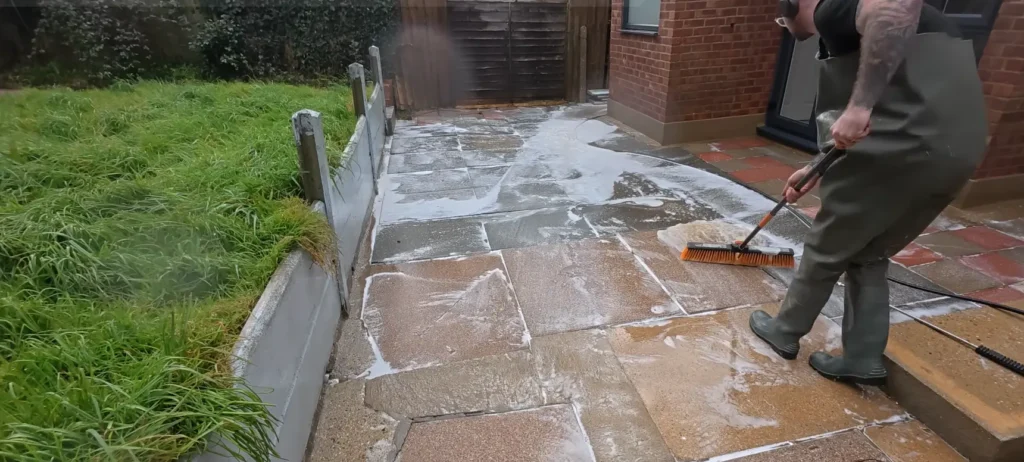
We protect plants, cover sensitive fixtures and apply the cleaning solution from the ground or roof edge. The solution does the work, and a gentle rinse removes the residue. Gutters and fascia often get cleaner in the process, and you can add gutter cleaning to the same visit.
How Long Roof Cleaning Results Last
Most roofs stay clean for two to three years after a proper soft wash, depending on shade and nearby trees. Pairing roof cleaning with house washing keeps the whole exterior consistent, which matters if you are getting ready to sell.
Call (904) 617-4480 for a free estimate on roof cleaning homeowners trust.
Frequently Asked Questions
Protect Your Roof — the Right Way
Soft washing, done correctly, extends your roof’s life instead of shortening it.