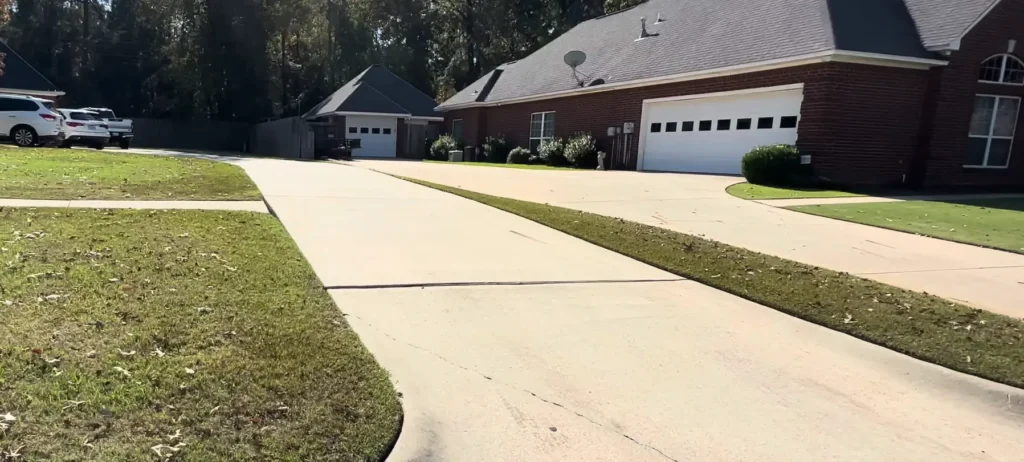
Gutter Cleaning in Jacksonville, FL
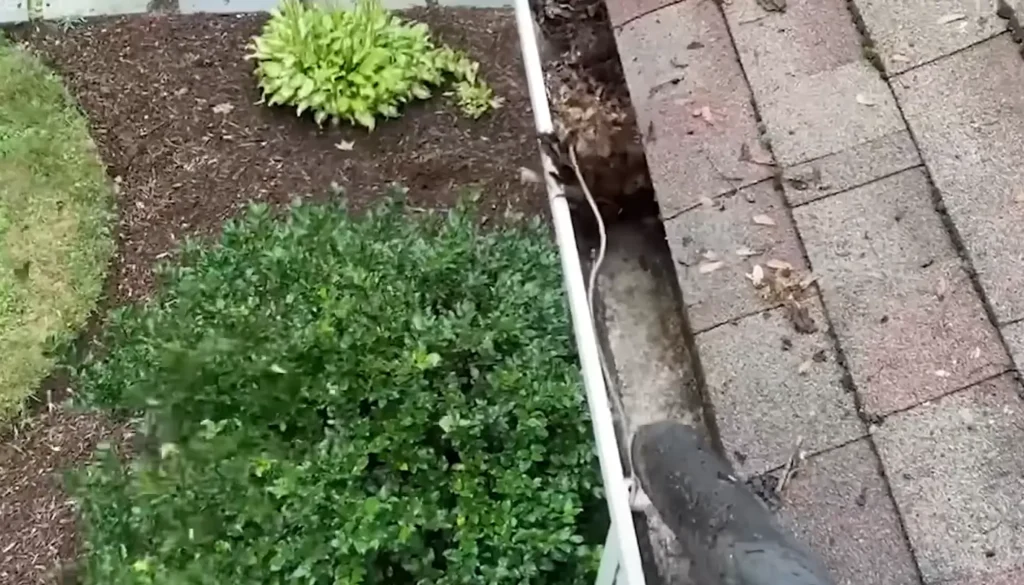
Our gutter cleaning service in Jacksonville clears leaves, pine needles, pollen and storm debris so rainwater drains away from your home. We also wash the outside of gutters and fascia to remove the black streaks and grime that build up over time.
We clear debris from gutters and exterior-brighten fascia and gutter faces throughout Jacksonville — addressing both the functional problem (clogged gutters can’t direct water away from your roof and foundation) and the visual one (gutters develop the same black algae streaking common on roofs). Best timed around late spring, after peak pollen season, and again before hurricane season ramps up, though we clean gutters year-round as needed.
Why Gutter Cleaning Matters More in Jacksonville
Gutters do double duty as both a maintenance issue and an appearance issue here:
Functionally, clogged gutters — full of leaves, pollen buildup, and storm debris — can’t properly direct water away from your roof and foundation. This becomes a bigger concern during Jacksonville’s hurricane season, which runs June through November, when heavy rainfall needs somewhere to go and a clogged system can lead to overflow, fascia damage, or water intrusion near the roofline.
Visually, gutters and fascia often develop the same black algae streaking common on roofs, since they’re constantly exposed to the same roof runoff carrying that organic growth downward.
What We Clean
We clear debris from inside the gutter channel — leaves, pollen buildup, granules, and storm debris — and exterior-brighten the fascia and gutter face, which is often the more visible part homeowners actually notice from the street or driveway. Algae streaking on the gutter face is treated with the same soft wash approach we use elsewhere on the exterior of a home.
Best Timing
- Late spring — after Jacksonville’s heaviest pollen season (typically February through April) has passed
- Early fall — ahead of, or during, hurricane season’s peak (August through October) to make sure gutters are clear before heavy rain events
- Homes with heavy tree canopy may need gutter cleaning more than twice a year
What It Costs
Gutter cleaning is priced by linear footage of gutter and severity of debris buildup — a home with heavy oak canopy overhead will typically run higher than one with minimal tree coverage nearby.
Why Gutter Cleaning Is Important
Heavy summer storms can drop a lot of rain in a short time. When gutters are clogged, water spills over and soaks fascia, soffits and the foundation. Regular gutter cleaning homeowners schedule helps prevent wood rot, staining and mold. The EPA notes that controlling moisture is key to preventing mold, and working gutters are a big part of that.
Gutter Cleaning Plus Fascia Washing
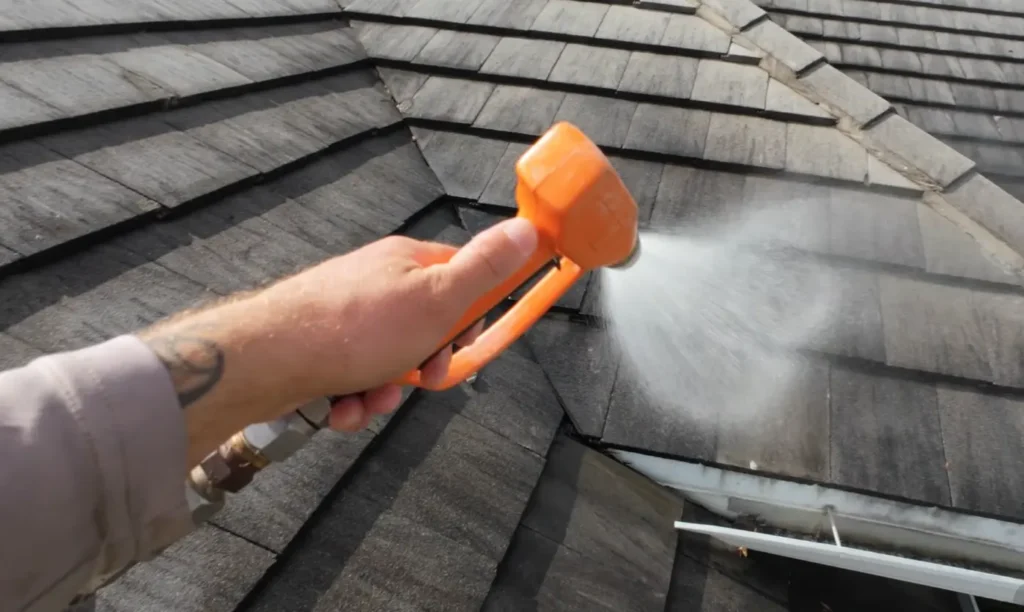
After clearing debris and checking downspouts, we soft wash gutter faces and fascia. This step pairs well with roof cleaning and house washing, since all three surfaces collect the same organic growth.
Most homes need gutter cleaning residents book at least twice a year, and more often under oak or pine trees. Watch storm outlooks from the National Weather Service Jacksonville office and call (904) 617-4480 for a free estimate.