Efflorescence Removal in Jacksonville, FL
Our efflorescence removal service in Jacksonville clears the white, chalky mineral deposits that appear on pavers, concrete, brick and stucco. Because efflorescence is a mineral salt and not dirt, it needs a specific treatment instead of more pressure.
That white, chalky, powder-like staining on your driveway, pavers, or block walls isn’t dirt, mold, or a cleaning failure — it’s efflorescence, a mineral deposit left behind when water moves through concrete or masonry and evaporates at the surface. It’s extremely common in Jacksonville because of our high water table, heavy seasonal rainfall, and the amount of new concrete being poured across the area’s fast-growing neighborhoods. Standard pressure washing alone often won’t fully remove it — it usually needs a targeted treatment approach. We diagnose it correctly and treat it the right way the first time.
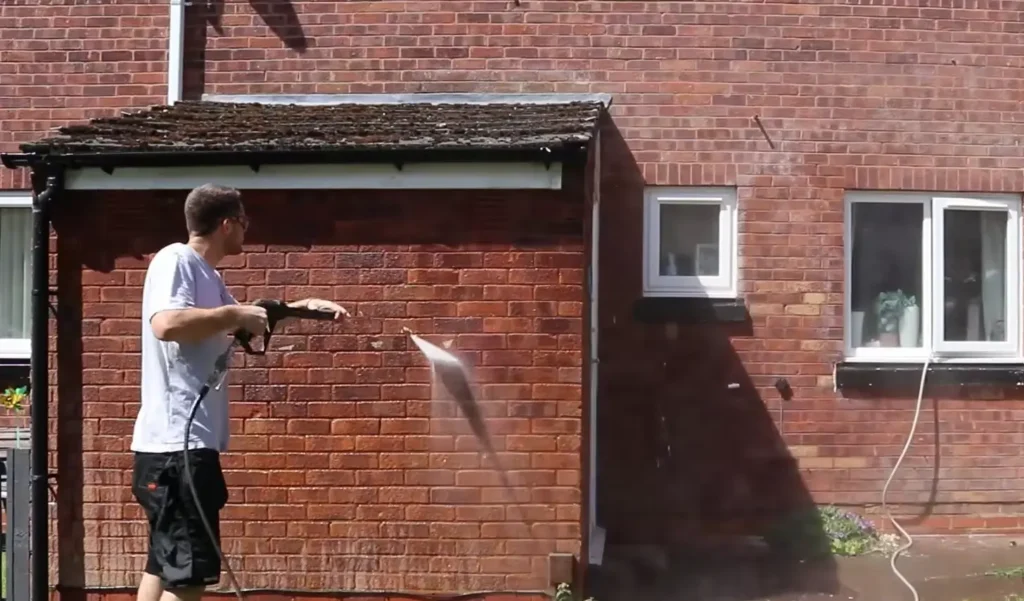
What Efflorescence Actually Is
Concrete, mortar, brick, and pavers all contain water-soluble mineral salts — mostly calcium hydroxide, which reacts with carbon dioxide in the air to form calcium carbonate. When water gets into the material (from rain, irrigation, groundwater, or moisture still curing out of new concrete) and later evaporates at the surface, it carries those dissolved salts with it. The water evaporates; the minerals don’t. What’s left behind is that white or grayish, powdery film you’re seeing.
This is a physical and chemical process, not a biological one — which is exactly why it behaves differently from the algae and mold problems most pressure washing content focuses on, and why it needs a different approach to remove correctly.
Efflorescence vs. Algae/Mold: How to Tell the Difference
| Efflorescence | Algae / Mold / Mildew | |
|---|---|---|
| Color | White, gray, or pale chalky film | Green, black, or dark gray |
| Texture | Dry, powdery, sometimes crystalline | Slick, slimy, or fuzzy when damp |
| Cause | Mineral salts carried to the surface by evaporating water | Organic growth feeding on moisture and organic debris |
| Where it shows up most | New concrete, retaining walls, pavers, areas with poor drainage or sprinkler overspray | Shaded, damp areas — north-facing walls, tree canopy, roofs |
| Removal approach | Mild acid-based treatment plus mechanical cleaning | Soft wash with biodegradable algaecide/cleaning solution |
Getting this diagnosis right matters — treating efflorescence like an algae problem (or vice versa) usually means paying for a service that doesn’t actually solve what’s on your property.
Why This Is So Common in Jacksonville Specifically
A few local factors make efflorescence a bigger issue here than in drier climates:
- High water table and sandy soil. Much of Duval County sits on soil that drains and wicks moisture readily, which means concrete slabs, driveways, and retaining walls are frequently in contact with ground moisture that migrates upward through the material.
- Heavy, frequent rainfall. Jacksonville’s wet season and near-daily summer storms keep exterior concrete and masonry saturated more often than drier regions, giving the evaporation-and-mineral-deposit cycle more opportunities to repeat.
- New construction. Newly poured concrete contains excess water from the curing process, and it’s extremely common for new driveways, sidewalks, and paver installations in fast-growing areas — Nocatee, eTown, Durbin Park, Bartram Park, and similar newer developments — to show efflorescence within the first year or two as that excess moisture works its way out.
- Irrigation overspray. Sprinkler systems that regularly hit driveways, walkways, or the base of block walls introduce additional water into the material on top of what rainfall already provides.
If you’re seeing this on a home less than two or three years old, it’s very likely a normal part of new concrete curing rather than a sign anything is wrong with the installation.
Our Efflorescence Removal Process
- Confirm the diagnosis. We check the color, texture, and location of the staining to confirm it’s efflorescence and not algae, rust, or another type of buildup — this determines which treatment we use.
- Test spot. Before treating the full area, we test the cleaning solution on a small, inconspicuous section to confirm how the specific material reacts.
- Apply a mild acid-based treatment. Efflorescence responds to acidic cleaning solutions that dissolve the mineral deposits — the concentration and dwell time depend on how heavy the buildup is and the surface material.
- Mechanically agitate and rinse. Especially on textured pavers or broom-finished concrete, physical agitation helps lift mineral deposits out of surface pores before rinsing.
- Assess for recurrence risk. If the underlying cause is ongoing (poor drainage, irrigation overspray, a persistently damp retaining wall), we’ll tell you honestly that the efflorescence may return without addressing that root cause — sealing can slow it, but it won’t fix a drainage problem behind a wall.
- Optional sealing. A penetrating concrete/paver sealer can reduce how much moisture moves through the material going forward, which reduces (but doesn’t always eliminate) future efflorescence — we can quote this as an add-on.
Being upfront here matters: efflorescence on a wall with an ongoing moisture source behind it will likely come back eventually, even after a full removal. We’d rather tell you that now than have you assume a one-time treatment is a permanent fix when the water problem hasn’t been solved.
🖼️ Secondary image placeholder — pressure-wash-walls.webp (retaining-wall/masonry efflorescence focus)
What It Costs
Efflorescence removal is typically priced separately from standard pressure washing, since it requires a different chemical treatment and more labor time than a standard rinse. Pricing depends on:
- Total square footage affected
- How long the staining has been present (older, deeper-set efflorescence takes more treatment time)
- Surface type — smooth concrete vs. textured pavers vs. block/masonry walls
- Whether sealing is added afterward
Where We See This Most in Jacksonville
- Driveways and walkways — especially homes with sprinkler heads positioned near the concrete edge
- Paver patios and pool decks — particularly in newer paver installations across St. Johns County and southside Jacksonville developments
- Retaining walls and block walls — common in properties with grade changes or drainage running behind the wall
- New-construction driveways in growing communities like Nocatee, eTown, and Durbin Park within the first 1–2 years after the pour
Efflorescence Removal: Treating the Cause
Efflorescence forms when moisture moves through masonry and carries salts to the surface. Our high water table and frequent rain make it common here. Effective efflorescence removal combines the right cleaner with steps to limit future moisture.
After treatment, sealing pavers can help reduce how often the haze returns; learn more about paver cleaning and sealing. Moisture problems also feed mold, as the EPA explains, so we look at drainage while on site. For general stains on concrete, see driveway cleaning. Call (904) 617-4480 for a free estimate on efflorescence removal homeowners can rely on.
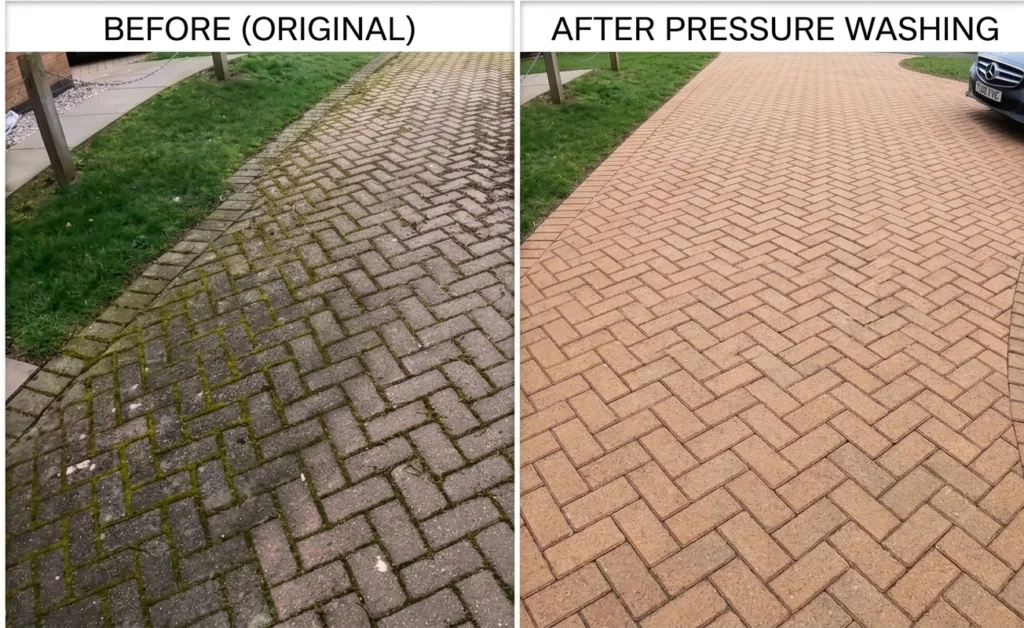
Signs You Need Efflorescence Removal
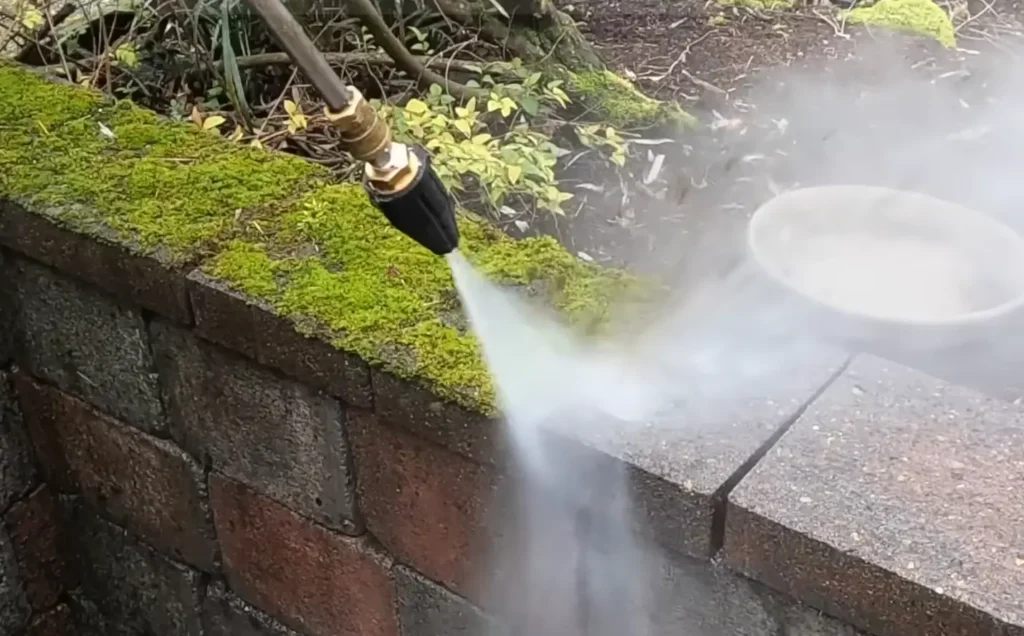
White powder that comes back after rain, chalky streaks on block walls and hazy patches on new pavers are all common signs. Pressure alone usually spreads the minerals instead of removing them, which is why professional efflorescence removal uses a treatment designed to dissolve the salts.
Efflorescence removal works best when it is paired with good drainage and, on pavers, a quality sealer. We will explain what is causing the buildup on your property and whether efflorescence removal alone or a combined cleaning and sealing plan makes more sense.
Our efflorescence removal process is safe for pavers, concrete, brick and block when done correctly, and we test a small area first on older or colored surfaces.
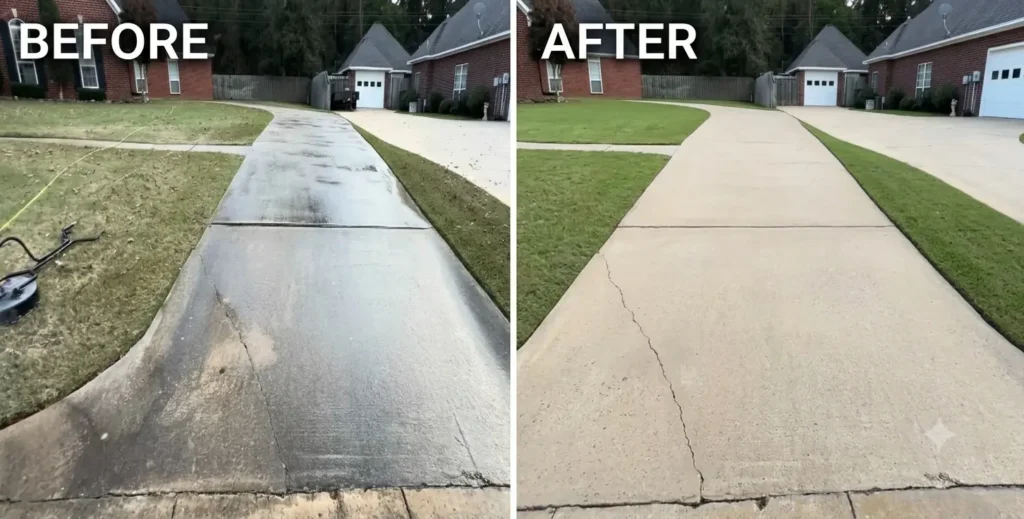
Frequently Asked Questions
Seeing a yellow film instead of white or green? That’s likely pollen, not efflorescence or algae — here’s how to tell them apart.
Get an Honest Assessment
We’ll tell you whether what you’re seeing is efflorescence, algae, or something else — and give you a real recommendation, not just a standard wash.