Driveway Cleaning in Jacksonville, FL
We pressure wash driveways, walkways, patios, and concrete surfaces throughout Jacksonville — removing algae, tire marks, organic staining, and built-up grime with the higher pressure concrete can safely handle (unlike siding or roofing). Most driveways run $100–$375 depending on size and how much buildup has set in. We’ll also tell you honestly when a stain isn’t a standard wash job — old oil stains, rust, and efflorescence (that white, chalky mineral staining) all need different treatment than routine cleaning, and we’ll flag that before we start, not after.
Professional driveway cleaning removes the algae, mildew, tire marks and grime that build up on concrete in our humid climate. We use a surface cleaner for an even finish, then treat the stains a simple rinse can’t lift.
Why Concrete Can Take Higher Pressure Than Your House
This is the flip side of what we explain on our house washing page: concrete, pavers, and other hard, non-porous surfaces can handle significantly higher water pressure than siding, stucco, or roofing — because there’s no paint to strip, no panel to force water behind, and no delicate finish to damage. That’s why driveway cleaning uses a different approach entirely from house washing, typically run through a surface cleaner attachment that delivers even, streak-free results across flat concrete rather than the wand-based soft wash method used on vertical surfaces.
That said, “higher pressure” doesn’t mean “no technique required.” Improper technique — inconsistent overlap, holding the wand too close, or using too high a PSI on older, more brittle concrete — can etch or scar the surface. We adjust pressure and equipment based on the age and condition of your specific concrete, not a single fixed setting for every driveway.
What We’re Actually Cleaning Off Your Driveway
Jacksonville’s climate creates a specific mix of buildup on concrete surfaces that’s worth understanding, because not all of it responds to the same treatment:
- Algae and organic staining — green or black film, most common on shaded driveways or sections that don’t get direct sun, and the most common thing standard driveway pressure washing addresses
- Efflorescence — that white, chalky mineral staining caused by water moving through concrete and evaporating at the surface, common on newer concrete and driveways with sprinkler overspray. This is a mineral issue, not dirt or algae, and needs a different treatment. → Full efflorescence removal details
- Rust and mineral staining — often from sprinkler heads, patio furniture, or metal fixtures sitting on concrete over time
- Tire marks and oil residue — common in driveways with regular vehicle use; older, deeply set oil stains sometimes can’t be fully lifted with standard washing and may need a degreasing pre-treatment
- Pollen film — heaviest February through April, leaving a yellow-tinted layer across flat concrete surfaces
🖼️ Algae/staining image placeholder — pressure-wash-algea.webp
Knowing which of these you’re dealing with matters, because treating efflorescence like algae (or vice versa) means paying for a service that won’t fully solve what’s actually on your driveway.
Surfaces We Clean
- Driveways. Our most common request — standard concrete, exposed aggregate, and stamped concrete all get cleaned, with pressure adjusted for the finish.
- Walkways and sidewalks. Often bundled with driveway cleaning in the same visit.
- Patios. Concrete patios get the same surface-cleaner treatment as driveways; paver patios require a slightly different approach to avoid disturbing joint sand.
- Pool decks. Beyond just appearance, algae buildup on pool decks is a real slip hazard — this is one of the more safety-relevant cleaning jobs we do.
- Garage floors and carports. Frequently overlooked, but oil, tire marks, and general grime build up here just as much as on the driveway itself.
🖼️ Walkway/sidewalk image placeholder — pressure-washing-foothpaths.webp
Our Process
- Assess the surface and the staining. We identify what we’re actually dealing with — algae, efflorescence, rust, or oil — since each responds differently to treatment.
- Pre-treat where needed. Heavy organic staining or oil residue often gets a pre-treatment application before the main cleaning pass, giving it time to break down the buildup.
- Surface clean at the appropriate pressure. We use a surface cleaner attachment for even coverage across flat concrete, adjusting PSI based on the concrete’s age and condition.
- Rinse and inspect. After cleaning, we walk the surface to check for any remaining spot staining that might need a second, more targeted pass.
- Be honest about limits. If a stain has been sitting for years and has worked its way deep into porous concrete, we’ll tell you what standard washing can and can’t fully lift — and what an additional acid-based or degreasing treatment would cost if you want to pursue it further, instead of promising a result we can’t guarantee.
What It Costs
| Area | Typical Price Range |
|---|---|
| Standard driveway (single-car to 2-car) | $100 – $200 |
| Larger driveway (3-car or extended) | $200 – $375 |
| Walkway/sidewalk add-on | Often bundled at a discount with driveway |
| Efflorescence or heavy stain treatment | Quoted separately — → efflorescence pricing |
Bundling your driveway with a house wash is common and usually comes with combined pricing — ask when you request your estimate.
Our Driveway Cleaning Process
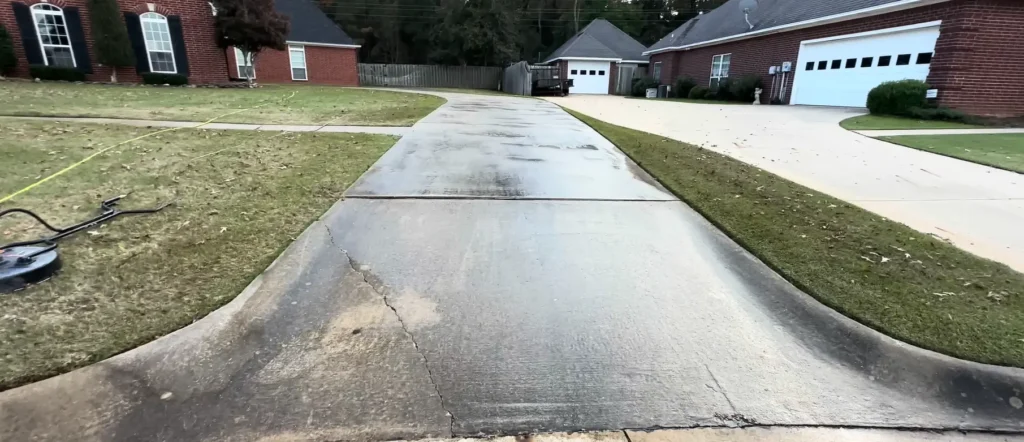
Good concrete cleaning is more than spraying water. We start by pre-treating organic growth, then use a rotary surface cleaner so there are no stripes or wand marks. Edges, expansion joints and walkways get detailed by hand, and we finish with a post-treatment that slows algae from returning.
Stains We Treat
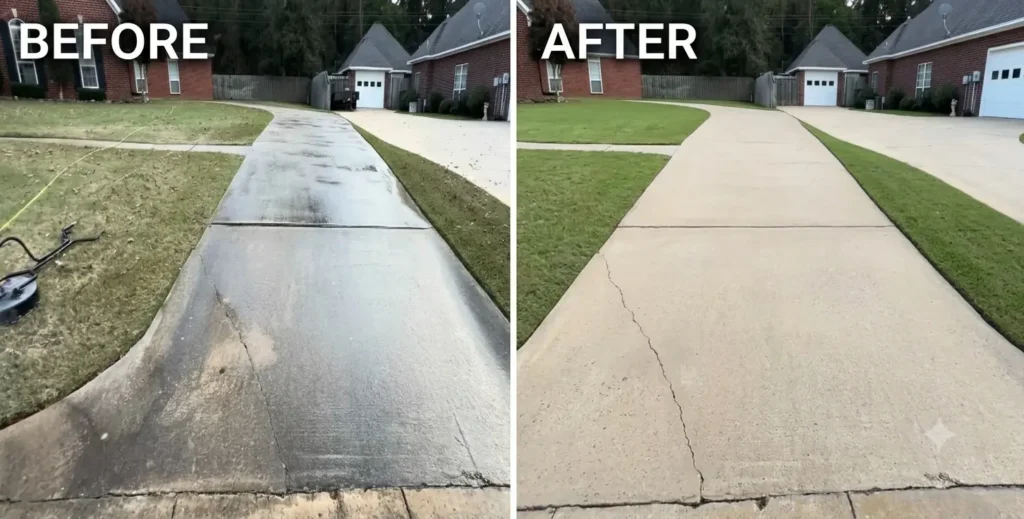
Oil spots, rust from irrigation water, red clay, leaf tannins and tire marks each need a different approach. White chalky deposits are a mineral problem that needs efflorescence removal rather than more pressure. Pavers are handled differently from poured concrete; see our paver cleaning and sealing page for details.
Protecting Your Yard and Storm Drains
Wash water from concrete can carry dirt and residue toward storm drains, which the EPA describes as polluted runoff. We manage runoff carefully and rinse surrounding landscaping during every job.
Want the whole exterior refreshed? Add house washing or pool deck cleaning to the same visit. Call (904) 617-4480 for a free estimate on concrete cleaning homeowners recommend.
Why Concrete Needs Regular Cleaning
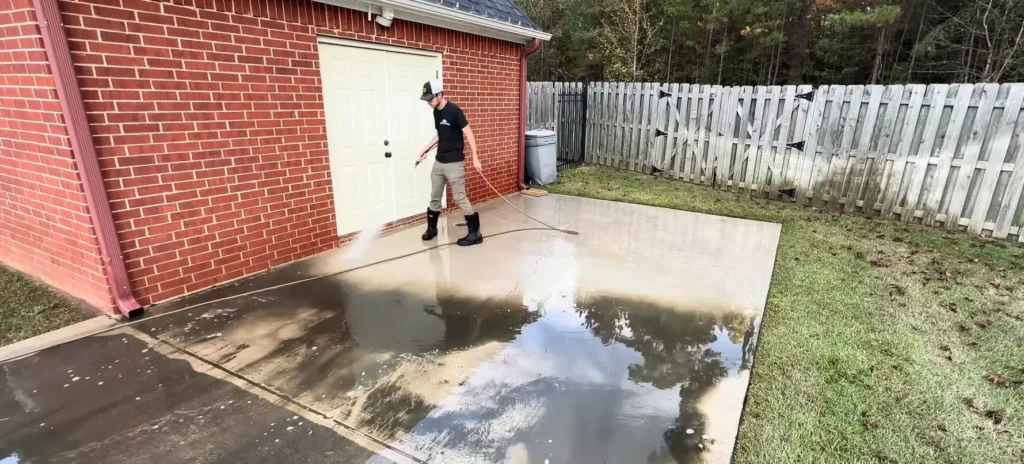
Concrete is porous, so algae, mildew and dirt work their way into the surface instead of sitting on top. In our humid climate, a slab that looks fine in winter can turn green by late summer. Regular cleaning removes that growth before it stains, keeps walkways less slippery after rain and makes the whole front of your home look cared for.
Most homeowners schedule this service once a year, often in spring after pollen season or before the holidays. Homes with heavy shade, sprinkler overspray or nearby oak trees may benefit from a second visit. We are happy to suggest a schedule that fits your property and budget during your free estimate.
Sealing is optional, but it can make future cleanings easier and help concrete resist oil and organic stains. If you are planning other projects, such as painting or landscaping, we recommend cleaning first so dust and overspray do not undo the results. Ask about combining services when you request your estimate.
Protecting Walkways, Patios and Entry Areas
Front walkways and entry steps often get the most foot traffic and the least attention. We clean them along with the main slab so the whole approach to your home matches. Rear patios and side yards can be added to the same visit, and we always rinse siding and garage doors afterward so no residue is left behind.
Frequently Asked Questions
Getting ready to sell your home? See our pre-listing curb appeal guide.
Ready for a Driveway That Actually Looks Clean?
Real pricing, the right pressure for your surface, and an honest read on what will and won’t come out.