What Not to Pressure Wash
Knowing what not to pressure wash can save you from costly repairs. High pressure can crack stucco, strip paint, force water behind siding and break window seals, so many surfaces need soft washing or hand cleaning instead.
Not every surface can handle high-pressure cleaning, and using the wrong pressure or method on the wrong surface is the single most common way a pressure washing job goes wrong. This page covers what to avoid, what actually causes damage, and how we decide which method to use on your property. We wrote this as a genuine safety resource, not a scare tactic to upsell — the honest answer is that most damage is entirely avoidable with the right technique, which is exactly why the method matters more than the equipment.
[Hero image: pressure-wash-walls.webp — surfaces that should never be pressure washed]
Surfaces That Should Never Be High-Pressure Washed
These surfaces need low-pressure soft washing, hand cleaning, or a different approach entirely — not standard high-pressure cleaning:
- Vinyl siding — can crack, warp, or have water forced behind panels, where mold can then grow undetected
- Stucco — porous and can be etched, chipped, or have water driven into the wall assembly
- Painted wood siding and trim — can lose paint entirely under high pressure
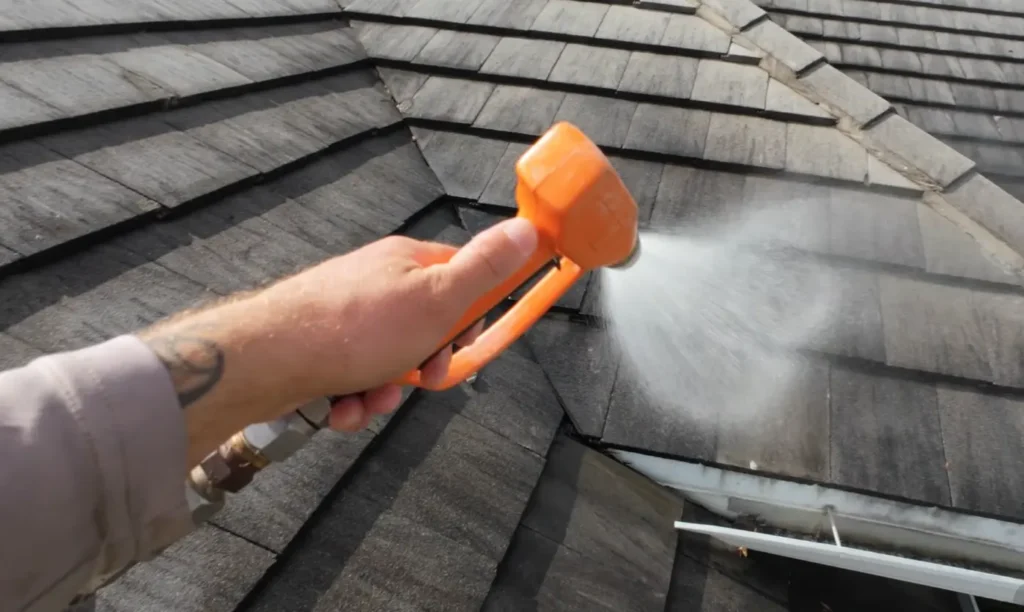
- Asphalt shingle roofs — high pressure strips protective granules and can force water under shingles, creating leak risk. → Full roof soft washing explanation
- Older or historic brick and mortar — repeated high pressure erodes mortar joints over time
- Wood decks and fences — can gouge, splinter, or strip wood fibers if pressure is too high
- Window screens and window seals — can be torn or damaged by direct high-pressure contact
- Outdoor electrical outlets, light fixtures, and AC units — water intrusion risk if not carefully avoided or thoroughly rinsed afterward
- Delicate landscaping — plants can be damaged by both direct high-pressure contact and by cleaning chemical runoff if not protected first
What CAN safely take higher pressure: concrete driveways, pavers (at appropriately lower pressure than concrete), brick pathways, and other hard, non-porous, ground-level surfaces. → Full driveway & concrete cleaning details
Why This Matters More Than Most Companies Explain
A lot of pressure washing marketing focuses on results — the dramatic before/after — without explaining that the method used to get there matters as much as the outcome. The honest version is this: the equipment isn’t what determines whether your property gets damaged. The technique does. The same pressure washer can be used correctly (soft wash on siding, appropriate pressure on concrete) or incorrectly (blasting siding at driveway-level pressure) — and the difference is entirely in how it’s operated, not what machine is used.
This is why we default to soft washing for anything other than hard, non-porous, ground-level surfaces, and why we’re upfront when a job needs a different, more careful approach than a standard wash.
Go Deeper
- → Can Pressure Washing Damage My Siding, Paint, or Windows? — a detailed look at exactly how and why damage happens, and how to avoid it
- → Is Pressure Washing Safe for Plants & Landscaping? — what actually happens to plants during a cleaning job, and how we protect them
- → Are Pressure Washing Chemicals Safe? — what is actually in the cleaning solutions we use, and safety considerations for kids, pets, and the environment
What Not to Pressure Wash and What to Use Instead
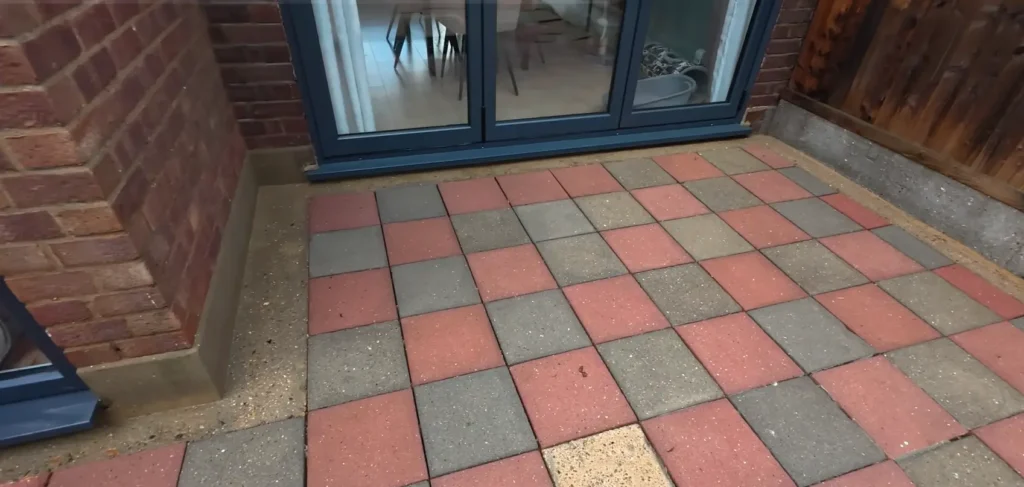
The short list of what not to pressure wash at high pressure includes roofs, windows, painted wood, stucco, older brick and vinyl siding. These surfaces are better cleaned with soft washing or hand window cleaning. For roofs, see our roof cleaning page.
Historic materials are especially sensitive. The National Park Service Technical Preservation Services recommends the gentlest effective cleaning for older masonry. Read more in our guides on damage to siding, paint and windows and protecting plants.
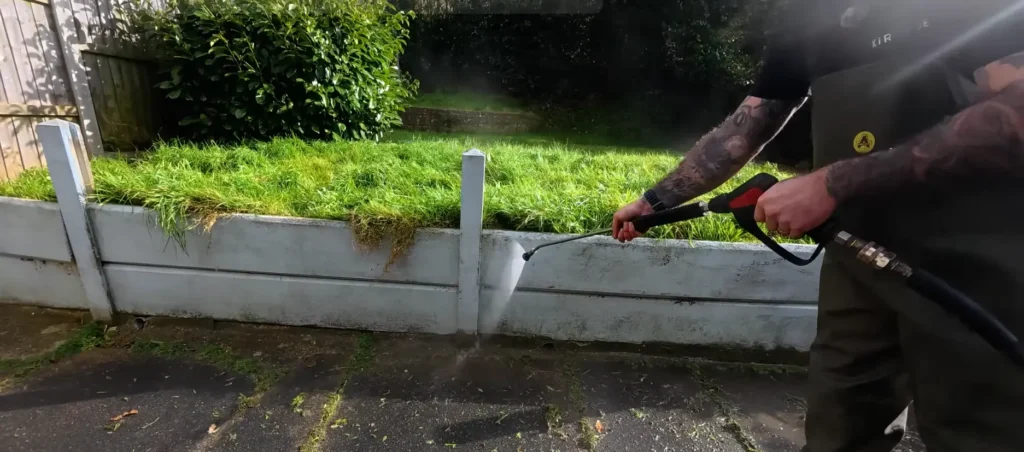
Surfaces That Need Special Care
When deciding what not to pressure wash, think about how the surface is built. Anything with seals, paint, soft wood or old mortar can be damaged by a focused stream of water. Windows, doors, light fixtures, outdoor electrical outlets, car finishes and air conditioning fins are on the list of what not to pressure wash at high pressure.
For these surfaces, soft washing or hand cleaning is safer and often more effective. If you are unsure, call us and we will explain what not to pressure wash on your property and how we would clean it instead.
What Not to Pressure Wash Around the Yard
Outdoors, the list of what not to pressure wash also includes soft wood decks, painted furniture, screens, gutters with loose seams and anything with a rubber seal. For these items, low pressure and the right cleaning solution do the job without damage. Knowing what not to pressure wash protects both your property and your budget.
When in doubt about what not to pressure wash, choose the gentler method first. You can always clean again, but you cannot undo damage.
Our team is always glad to talk through what not to pressure wash before a project starts.
Frequently Asked Questions
We’ll Tell You What’s Safe for Your Property — Honestly
No guesswork, no upsell — just the right method for what you actually have.