Paver Cleaning & Sealing in Jacksonville, FL
We clean and seal paver driveways, walkways, patios, and pool decks throughout Jacksonville — using the lower-pressure, joint-sand-conscious technique pavers need, then sealing to lock in that sand, resist future staining, and slow how quickly algae re-establishes. Sealing isn’t required after every cleaning, but for pavers specifically — increasingly common in newer Jacksonville-area developments — it’s one of the more worthwhile add-ons available, since it directly extends the time between future cleanings.
Our paver cleaning & sealing service in Jacksonville restores faded, stained or moss-covered pavers and protects them with a quality sealer. We clean at the right pressure to protect joint sand, re-sand where needed, and seal to slow weeds, stains and algae.
Why Pavers Need a Different Approach Than Poured Concrete
Pavers aren’t one solid slab — they’re individual units held in place by sand-filled joints, which changes how they need to be cleaned:
- Pressure has to be kept lower than what a driveway or standard concrete surface can handle, to avoid blasting out the joint sand that keeps pavers stable and prevents shifting.
- Some joint sand loss is normal even with proper technique, which is why re-sanding is often part of a complete paver cleaning job, not an optional extra.
- Pavers are more common in newer Jacksonville developments — communities across St. Johns County and southside Jacksonville increasingly use pavers for driveways and patios rather than poured concrete, which means paver-specific care is a growing need, not a niche one.
What Sealing Actually Does
Sealing is a separate service from cleaning, applied after the surface has been properly cleaned and dried. It’s worth understanding what it does and doesn’t accomplish:
- Locks in joint sand — reduces how much sand washes or works its way out between pavers over time
- Resists future staining — a sealed surface is less porous, so oil, dirt, and organic material have a harder time penetrating and setting into the paver material itself
- Slows algae and mold regrowth — particularly valuable in shaded, damp areas (like around a pool or under tree canopy) where algae tends to re-establish fastest
- Enhances color — many sealers slightly deepen or “wet-look” enhance the paver color, though this is a secondary benefit, not the main reason to seal
- Does not make pavers maintenance-free — sealed pavers still need periodic cleaning; sealing extends the interval, it doesn’t eliminate the need entirely
Sealing typically needs to be reapplied every few years, depending on foot traffic, sun exposure, and how quickly the sealer wears from weathering.
Where We Clean & Seal Pavers
- Paver driveways — increasingly common in newer developments; cleaned and sealed with the same joint-sand-conscious approach used throughout.
- Paver walkways and patios — often bundled with a driveway or house washing visit.
- Pool decks — one of the highest-value places to seal, given constant moisture exposure and barefoot traffic. → Full pool deck & paver cleaning details
- Retaining walls and paver borders — frequently where we see efflorescence develop, given how often these areas hold moisture behind them. → Full efflorescence removal details
Our Process
- Assess the paver material and current condition. Concrete pavers, natural stone (like travertine), and clay brick pavers all respond somewhat differently to cleaning and sealing.
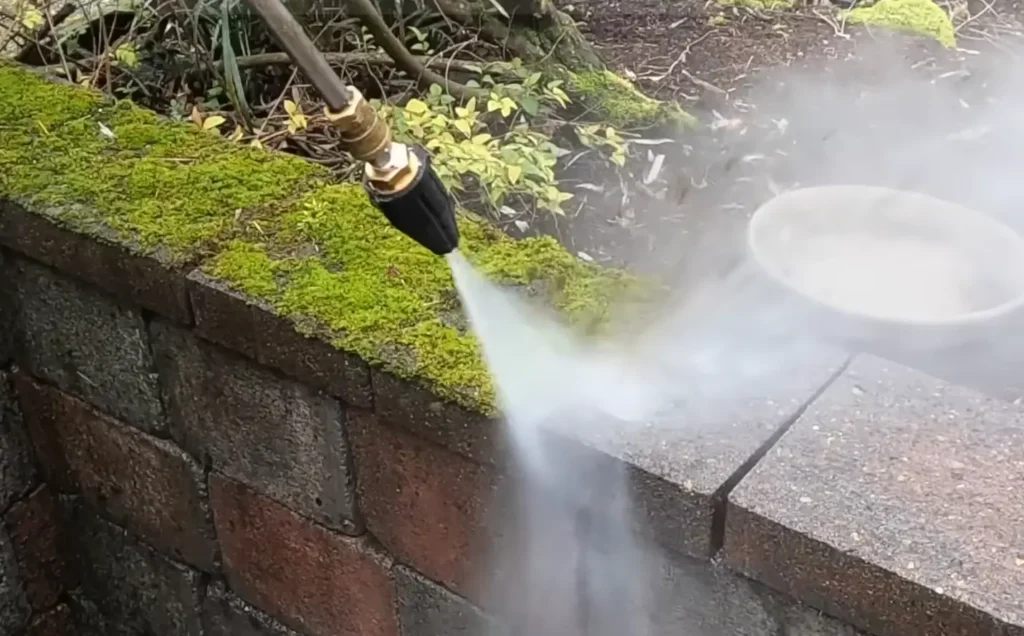
- Clean at appropriate low pressure. Removing algae, organic staining, and general grime without displacing more joint sand than necessary.
- Allow the surface to fully dry. Sealer applied over damp pavers won’t bond properly and can trap moisture underneath — this step matters more than people often expect.
- Re-sand joints as needed. Replenishing any sand lost during cleaning before sealing locks it in place.
- Apply sealer evenly. Applied in controlled sections to avoid pooling or uneven sheen across the surface.
What It Costs
Paver cleaning and sealing is priced by square footage, with sealing quoted as a separate line item from cleaning:
- Cleaning: Similar per-square-foot range to driveway cleaning, with a modest premium for the more careful paver-specific technique
- Re-sanding: Quoted if significant joint sand loss is visible after cleaning
- Sealing: Priced separately by square footage — ask about combined cleaning + sealing pricing when you request your estimate
Why Paver Cleaning & Sealing Matters
Pavers are porous, and in our humid climate they quickly collect algae, mildew and weeds in the joints. Paver cleaning & sealing homeowners invest in makes the color come back and keeps the surface easier to maintain.
Our Paver Cleaning & Sealing Process
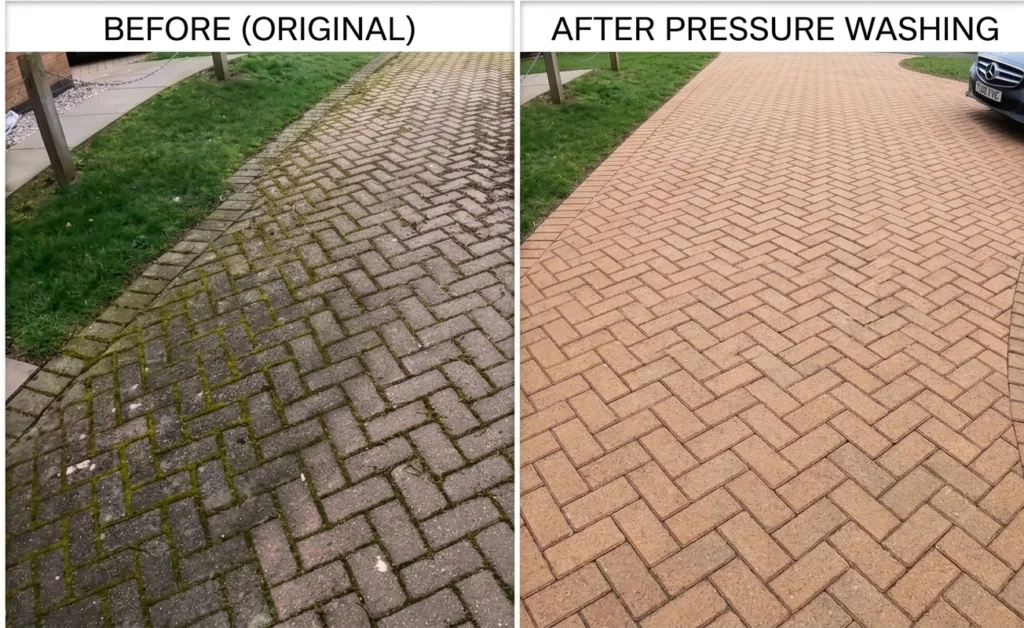
We clean with a surface cleaner, treat organic growth, and rinse away debris. Once the pavers are fully dry, we replace joint sand as needed and apply sealer. White haze on new pavers is often efflorescence, which needs efflorescence removal before sealing.
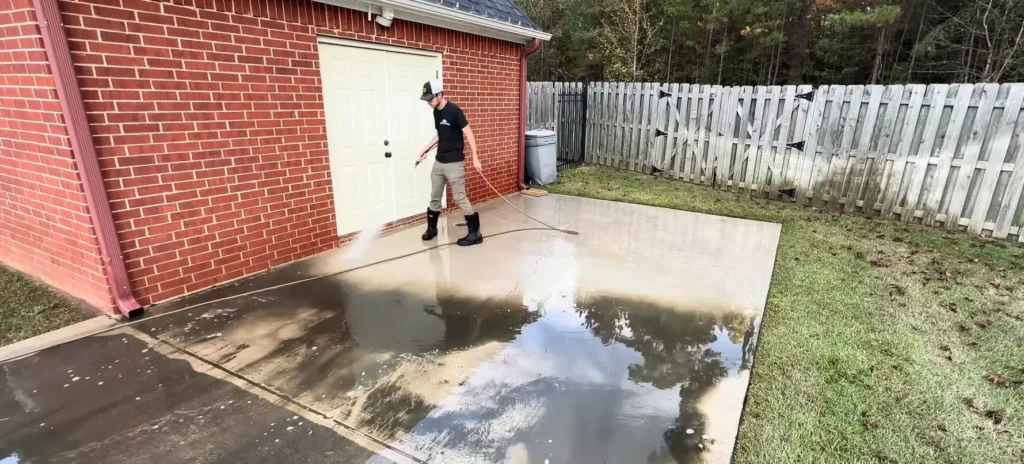
Sealing also helps reduce how much dirt and residue washes off during rain, part of the polluted runoff problem described by the EPA. For poured concrete, see driveway cleaning, and for pool areas, our pool deck cleaning page. Call (904) 617-4480 to get a free quote for paver cleaning & sealing homeowners recommend.
How Often Do Pavers Need Attention?
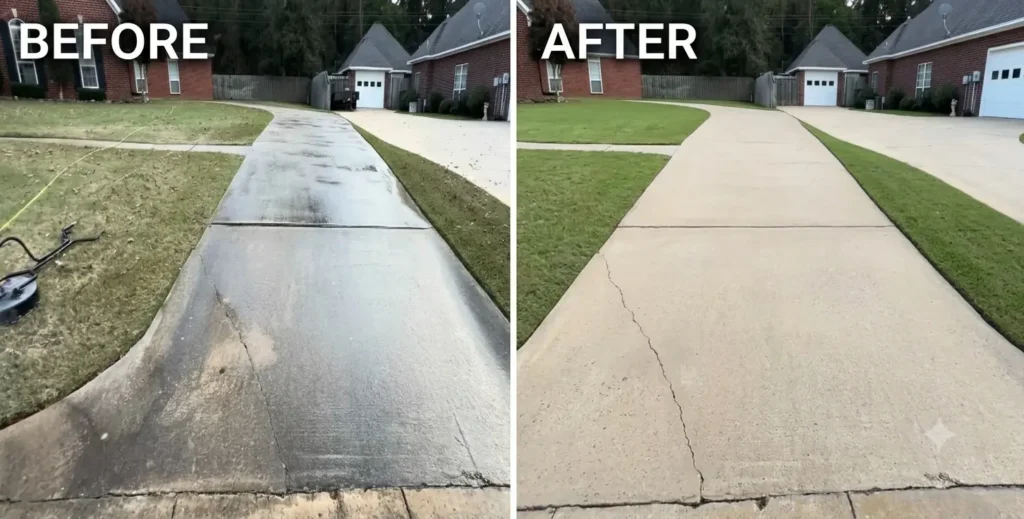
Most patios and driveways benefit from paver cleaning every one to two years and resealing every two to three years. Shaded areas and pool decks may need paver cleaning more often because algae returns faster where moisture lingers.
Frequently Asked Questions
Protect Your Pavers, Not Just Clean Them
Cleaning removes what’s there now. Sealing helps keep it from coming back as fast.